
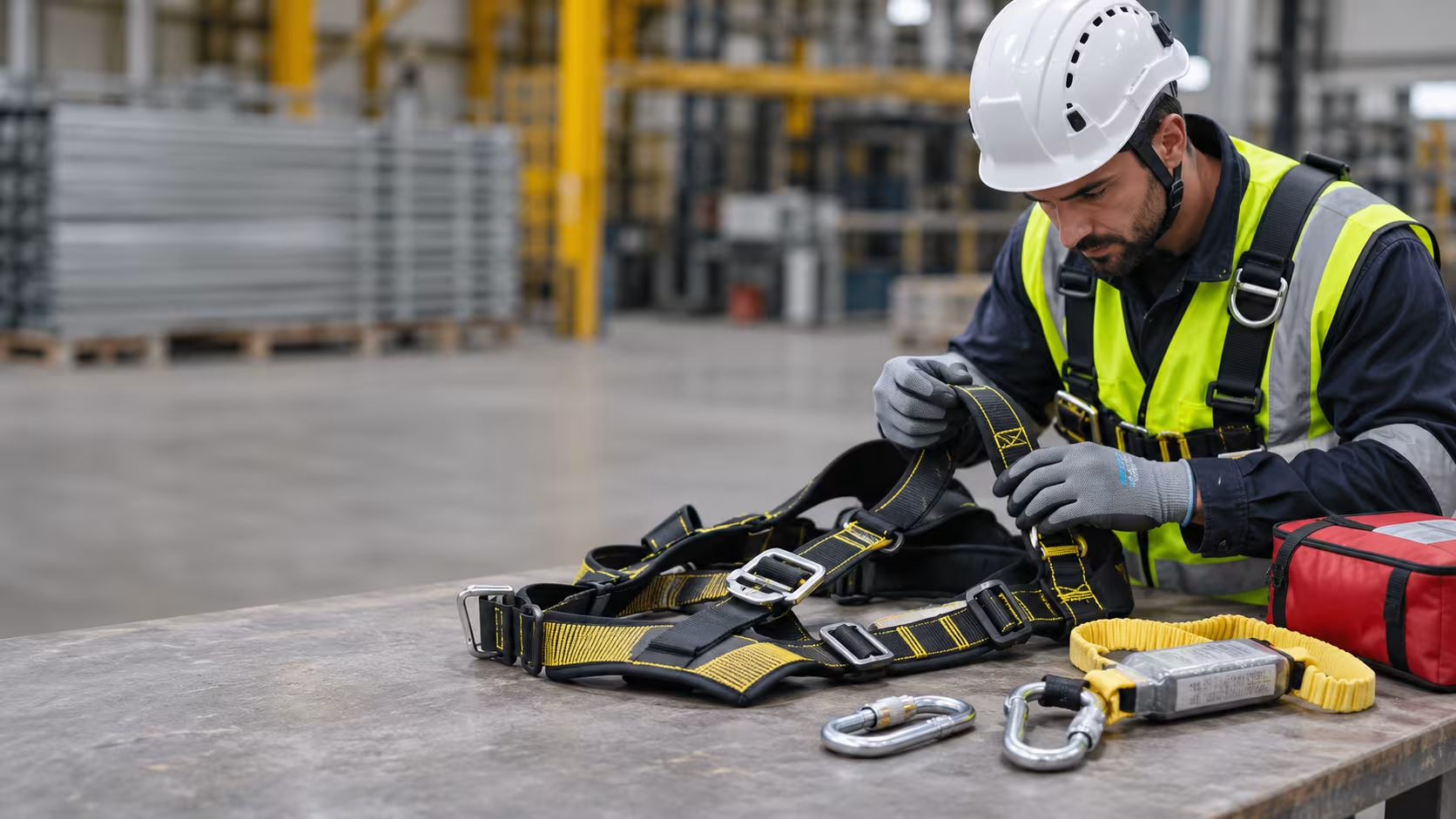
Regular inspection of Personal Protective Equipment (PPE) is essential for maintaining safety in working-at-height environments. Even the best equipment can fail if it is damaged, incorrectly adjusted, or improperly maintained. A structured PPE inspection checklist helps ensure compliance, reduce fall risks, and support effective height safety system maintenance.
This article provides a practical PPE inspection checklist for professionals using working at height safety systems across construction, maintenance, and industrial environments.
Why PPE Inspection Is Critical for Working at Height
Personal protective equipment is often the last line of defense against serious injury. Worn or defective PPE can compromise the entire safety system, increasing the likelihood of falls and rescue failures.
Routine inspection helps workers:
- Identify visible damage and wear
- Verify correct functionality
- Maintain compliance with safety requirements
- Work safely at height with confidence
When Should PPE Be Inspected?
PPE should be inspected:
- Before every use by the user
- Periodically by a competent person
- After any fall or impact
- Following exposure to harsh conditions
Regular inspections are a key part of working at height safety systems and overall risk management.
PPE Inspection Checklist (Printable / On-Site Use)
| PPE Component | Inspection Checkpoints | Action Required |
|---|---|---|
| Safety Harness | Cuts, fraying, stitching, buckles | Remove from service if damaged |
| Connectors & Hardware | Cracks, deformation, locking action | Replace if faulty |
| Lanyards & Energy Absorbers | Wear, stretching, deployment | Do not reuse if activated |
| Permanent Anchor Points | Stability, corrosion, damage | Repair or restrict access |
| Portable Lifeline | Correct setup, tension, compatibility | Reinstall or replace |
| Fall Protection Rescue Kit | Completeness, device operation | Service or replace |
PPE Inspection Checklist for Working at Height
Safety Harness Inspection
Check the harness for:
- Cuts, fraying, or abrasion on webbing
- Broken or loose stitching
- Deformed or corroded buckles
- Proper adjustment and fit
Any damaged harness must be removed from service immediately.
Connectors and Hardware
Inspect all metal components, including:
- Carabiners and hooks for cracks or sharp edges
- Proper gate operation and locking mechanisms
- Signs of corrosion or deformation
Connectors must function smoothly and securely under load.
Lifeline Systems and Anchorage
When inspecting lifeline systems:
- Verify compatibility with PPE
- Check permanent anchor points for stability and damage
- Ensure portable lifeline systems are correctly installed and tensioned
Anchorage integrity is critical to fall arrest performance.
Energy Absorbers and Lanyards
Inspect lanyards and energy absorbers for:
- Deployment indicators
- Excessive stretching
- Chemical damage or contamination
Activated or damaged energy absorbers must never be reused.
Fall Protection Rescue Equipment
A fall protection rescue kit must be inspected to ensure:
- All components are present
- Mechanical devices operate correctly
- Ropes and straps are free from damage
Rescue equipment must always be ready for immediate use.
Documentation and Traceability
Inspection records should include:
- Inspection date and inspector name
- Equipment identification details
- Observed defects and actions taken
Maintaining clear records supports compliance and effective height safety system maintenance.
Common PPE Inspection Mistakes to Avoid
- Skipping pre-use checks
- Ignoring minor damage
- Using incompatible components
- Failing to remove defective PPE from service
Any of these mistakes can lead to system failure during a fall.
Training and Competency
PPE inspection is only effective when workers are trained to recognize defects and understand equipment limitations. Training should cover:
- Correct inspection techniques
- System compatibility
- Emergency and rescue procedures
Competent inspections improve safety and reduce downtime.
Conclusion
A structured PPE inspection checklist is essential for maintaining safe and reliable working at height safety systems. From harnesses and connectors to permanent anchor points, portable lifeline systems, and fall protection rescue kits, every component must be inspected regularly to ensure performance and compliance.
Consistent inspection practices not only protect workers but also support long-term height safety system maintenance and help teams work safely at height with confidence.
FAQ
1. Why is a PPE inspection checklist important for working at height?
A PPE inspection checklist is important because it helps identify damage, wear, or malfunction before use, reducing fall risks and supporting safe working at height.
2. How often should personal protective equipment be inspected?
Personal protective equipment should be inspected before each use by the user and periodically by a competent person as part of height safety system maintenance.
3. What PPE items must be checked before working at height?
Key items include safety harnesses, connectors, lanyards, lifeline systems, permanent anchor points, and fall protection rescue equipment.
4. Can damaged PPE still be used if the defect is minor?
No, any damaged or defective PPE must be removed from service immediately, as even minor defects can lead to system failure during a fall.
5. Does PPE inspection apply to portable lifeline systems?
Yes, portable lifeline systems must be inspected to ensure correct installation, tension, compatibility, and structural integrity before use.