
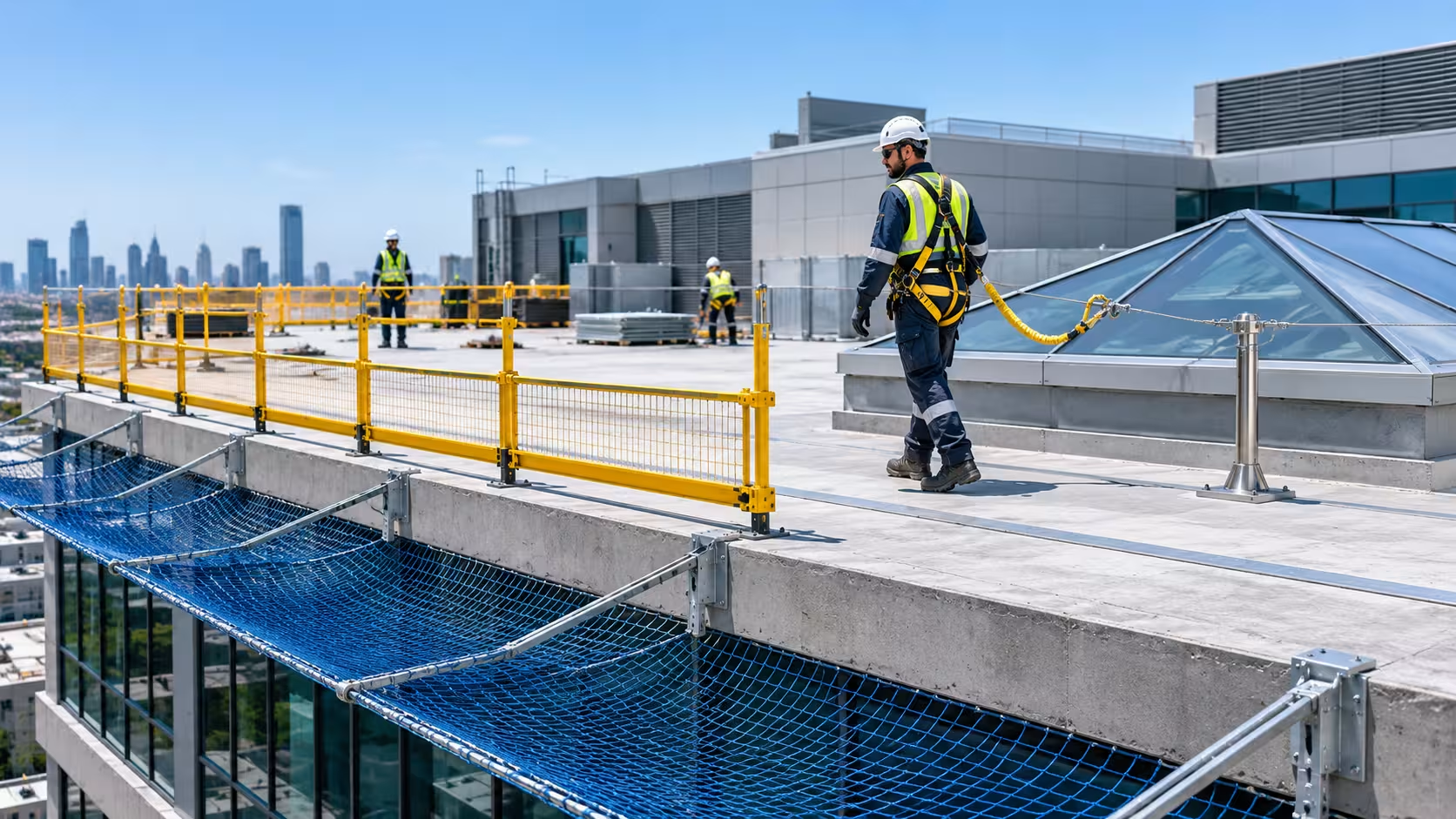
Working at heights remains one of the leading causes of serious workplace injuries. Whether on construction sites, industrial facilities, warehouses, or rooftops, proper planning and the right fall protection solutions are critical.
By implementing reliable roof safety systems and effective safety nets, businesses can significantly reduce risk and ensure compliance with safety standards.
Below are ten essential safety tips to help prevent falls and create a safer working environment.
1. Conduct a Comprehensive Risk Assessment
Before any work at height begins, carry out a detailed risk assessment.
Evaluate:
- Work surface stability
- Weather conditions
- Access and egress points
- Potential fall hazards
- Fragile surfaces such as skylights
A thorough assessment helps determine the most appropriate fall protection solutions for the task.
2. Use Proper Fall Protection Systems
Whenever workers are exposed to fall hazards, suitable fall protection must be in place.
This may include:
- Guardrails
- Safety nets
- Personal fall arrest systems
- Controlled access zones
Choosing the correct system depends on the nature and duration of the work.
3. Install Reliable Roof Safety Systems
Roofs present unique risks due to edges, slopes, and fragile surfaces.
Effective roof safety systems may include:
- Roof edge protection systems
- Roof anchor point fall protection
- Skylight fall protection
These systems provide both collective and individual protection, reducing the likelihood of severe injury.
4. Ensure Proper Training for All Workers
No safety system can replace proper training.
Workers must understand:
- Hazard identification
- Equipment inspection procedures
- Emergency response protocols
- Correct use of harnesses and anchor points
Training ensures that safety procedures are followed consistently.
5. Use Safety Nets Where Appropriate
In environments where guardrails are impractical, safety nets offer a reliable alternative.
Properly installed safety netting can:
- Catch falling workers
- Protect people working below
- Reduce injury severity
- Provide collective protection without restricting movement
Safety nets are particularly useful in large-scale construction and roofing projects.
6. Secure Edges and Openings
Unprotected edges and openings are among the most common fall hazards.
Protection methods include:
- A temporary guardrail system
- Covers for floor openings
- Barricades and warning signage
Edge protection is especially critical on rooftops and elevated platforms.
7. Inspect Equipment Before Every Use
All fall protection equipment must be inspected regularly.
Check for:
- Wear and tear
- Corrosion
- Loose fasteners
- Damaged harness straps
- Compromised anchor points
Routine inspections ensure that your fall protection equipment remains reliable.
8. Protect Fragile Surfaces
Skylights and brittle roofing materials can fail without warning.
Installing proper skylight fall protection prevents accidental breakthroughs. Clearly mark fragile areas and restrict access whenever possible.
9. Develop a Rescue Plan
Having fall protection in place is not enough. A rescue plan must also be prepared, with the right rescue kit ready on site.
Your plan should include:
- Rescue procedures
- Assigned responsibilities
- Communication methods
- First aid response
Rapid rescue reduces the risk of suspension trauma and other complications.
10. Monitor and Review Safety Practices Regularly
Workplace safety is an ongoing process.
Regularly:
- Review procedures
- Update equipment
- Provide refresher training
- Audit roof safety systems
Continuous improvement ensures long-term protection and regulatory compliance.
Final Thoughts
Working at height requires careful planning, proper training, and the implementation of reliable fall protection solutions. By investing in effective roof safety systems and high-quality safety nets, organizations can protect workers, prevent costly accidents, and create a culture of safety.
Taking proactive steps today can prevent life-changing injuries tomorrow.
FAQ
1. What are the most effective fall protection solutions for working at heights?
The most effective fall protection solutions depend on the work environment and risk level. Common options include guardrail systems, safety netting, personal fall arrest systems, and roof anchor point fall protection. In many cases, combining collective protection with PPE-based systems provides the highest level of safety.
2. How do safety nets improve workplace safety?
Safety nets provide collective fall protection by catching workers in the event of a fall. They help reduce injury severity, protect personnel working below, and allow greater mobility compared to some active restraint systems. They are especially useful in large-scale construction and roofing projects.
3. When should roof safety systems be installed?
Roof safety systems should be installed before any work at height begins. This includes situations involving roof maintenance, equipment installation, inspections, or construction activities. Systems such as roof edge protection systems and skylight fall protection are critical whenever there is a risk of falling from height.
4. What is the difference between collective protection and personal fall protection?
Collective protection systems, such as safety netting or a temporary guardrail system, protect multiple workers simultaneously without requiring individual action. Personal fall protection systems, such as harnesses connected to roof anchor point fall protection, rely on individual equipment and proper use by each worker.
5. Why is skylight fall protection important on rooftops?
Skylights and other fragile roof surfaces may not support a worker’s weight and can fail unexpectedly. Installing proper skylight fall protection prevents accidental falls through these openings and significantly reduces the risk of serious injuries during rooftop operations.