
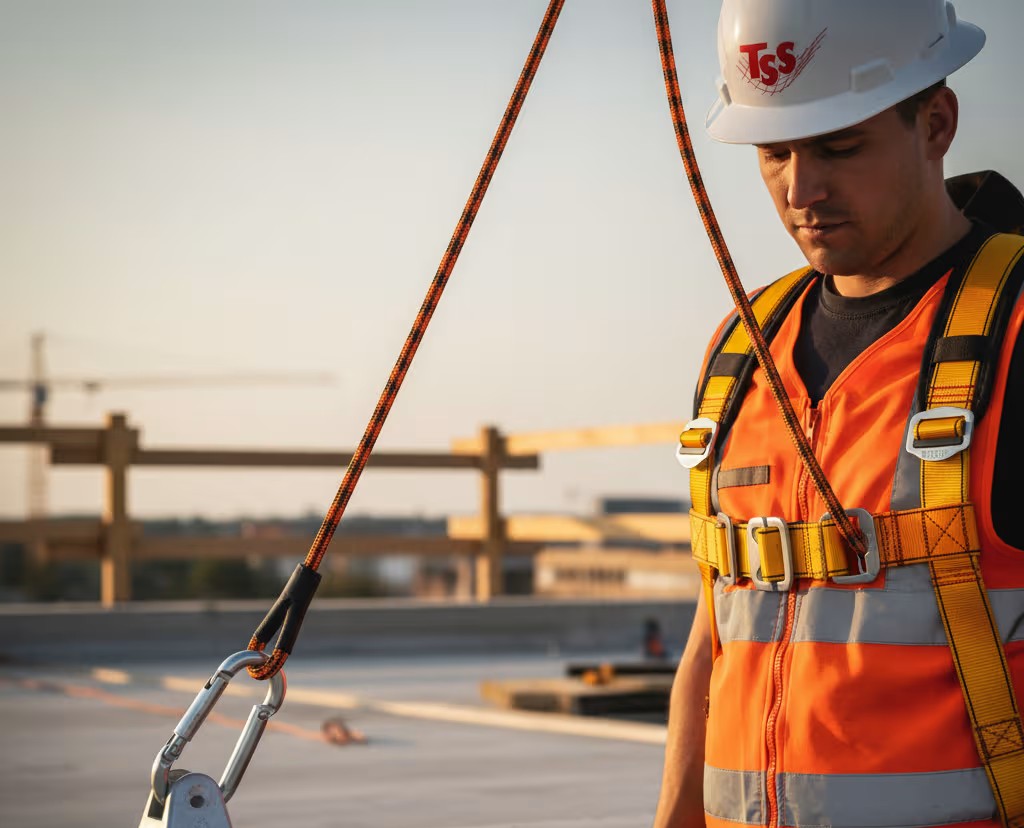
Working at height involves significant risks, particularly the danger of falling. To reduce these risks, Personal Protective Equipment (PPE) must work in direct coordination with lifeline systems. When properly designed and installed, lifelines and PPE form an integrated safety solution that protects workers before, during, and after a fall.
This article explains how PPE interacts with lifeline systems, the role of lifeline anchor points, and the differences between temporary lifeline and permanent lifeline solutions.
The Relationship Between PPE and Lifeline Systems
PPE alone cannot provide adequate protection at height unless it is correctly connected to a lifeline system. Lifelines act as the structural safety backbone, while PPE—such as harnesses and connectors—controls the forces applied to the worker in the event of a fall.
Together, these systems ensure continuous protection during movement, positioning, and maintenance tasks at height.

Lifeline Anchor Points: The Foundation of Safety
Lifeline anchor points are the most critical elements of any height safety system. They transfer fall forces from the PPE and lifeline into the structure itself. Anchor points must be properly engineered, securely installed, and compatible with both temporary and permanent lifeline systems.
Incorrect anchorage can compromise the entire safety system, regardless of PPE quality.
Temporary vs Permanent Lifeline Systems
Temporary Lifeline Systems
A temporary lifeline is designed for short-term tasks or changing work environments. These systems are commonly used during construction, installation, or maintenance projects where flexibility is required.
Temporary lifelines allow workers to remain connected while moving along elevated surfaces without permanent structural modification.
Permanent Lifeline Systems
A permanent lifeline is installed for long-term access and recurring work at height. These systems are typically integrated into rooftops, façades, or industrial structures to provide ongoing fall protection.
Permanent systems reduce setup time, ensure consistent safety standards, and are ideal for routine inspection and maintenance tasks.
Common Lifeline Applications in Working at Height
Lifeline on Roof
A Lifeline on roof provides fall protection for workers operating near roof edges or across large roof surfaces. PPE connects directly to the lifeline, allowing safe movement while maintaining continuous fall protection.
Lifeline on Standing Seam Roof
A Lifeline on Standing Seam Roof is specifically designed to integrate with metal roof profiles without penetrating the surface. This type of system supports PPE while preserving roof integrity and long-term performance.
Lifeline Overhead
A Lifeline Overhead system suspends the lifeline above the worker, minimizing trip hazards and reducing swing-fall risks. Overhead systems are commonly used in industrial environments and work areas with frequent horizontal movement.
Rail Lifeline Systems
A Rail Lifeline uses a rigid track instead of a cable. This design allows smoother travel, reduced deflection, and precise control of fall forces when used with compatible PPE.
SecuRail 2016 Lifeline Rail System
The SecuRail 2016 lifeline rail system represents an advanced rigid rail approach where PPE connects directly to a guided rail, ensuring controlled fall arrest and enhanced worker mobility at height.

Interaction Between PPE and Lifeline Systems
| System Component | Function | Role in Fall Protection |
| Safety Harness (PPE) | Supports the worker’s body | Distributes fall forces safely |
| Connector & Energy Absorber | Links PPE to lifeline | Reduces impact during a fall |
| Lifeline Anchor Points | Secure load transfer | Ensures system stability |
| Temporary Lifeline | Provides flexible access | Short-term fall protection |
| Permanent Lifeline | Provides continuous access | Long-term working-at-height safety |
How PPE Responds During a Fall
When a fall occurs:
- The PPE harness supports the worker’s body
- The connector transfers force to the lifeline
- The lifeline distributes loads to anchor points
- Energy absorption reduces impact forces
This coordinated response prevents free fall, limits injury, and keeps the worker safely suspended for rescue.
Inspection, Training, and System Compatibility
For lifeline systems and PPE to function effectively together:
- All components must be compatible
- Regular inspection is mandatory
- Workers must receive proper training
Even well-designed systems can fail if PPE is incorrectly connected or lifelines are misused.
Conclusion
PPE and lifeline systems are not standalone safety measures—they are interdependent components of a complete working-at-height solution. From lifeline anchor points to temporary lifeline and permanent lifeline systems, every element must function together to provide effective fall protection.
Applications such as Lifeline on roof, Lifeline Overhead, and Rail Lifeline systems demonstrate how integrated design improves safety, mobility, and compliance in working-at-height environments.
1. How does PPE work with lifeline systems in working at height?
PPE works with lifeline systems by connecting a safety harness to a lifeline through certified connectors, allowing the system to arrest a fall and reduce impact forces if a fall occurs
2. What are lifeline anchor points used for?
Lifeline anchor points are used to transfer fall arrest forces from the lifeline and PPE into the supporting structure, ensuring system stability during a fall.
3. What is the difference between a temporary lifeline and a permanent lifeline?
A temporary lifeline is designed for short-term or changing work locations, while a permanent lifeline is installed for long-term access and repeated work at height.
4. When should an overhead lifeline system be used?
An overhead lifeline system should be used when reducing trip hazards and swing-fall risks is important, such as in industrial environments or areas requiring frequent horizontal movement.
5. Why is PPE training important when using lifeline systems?
PPE works with lifeline systems by connecting a safety harness to a lifeline through certified connectors, allowing the system to arrest a fall and reduce impact forces if a fall occurs