
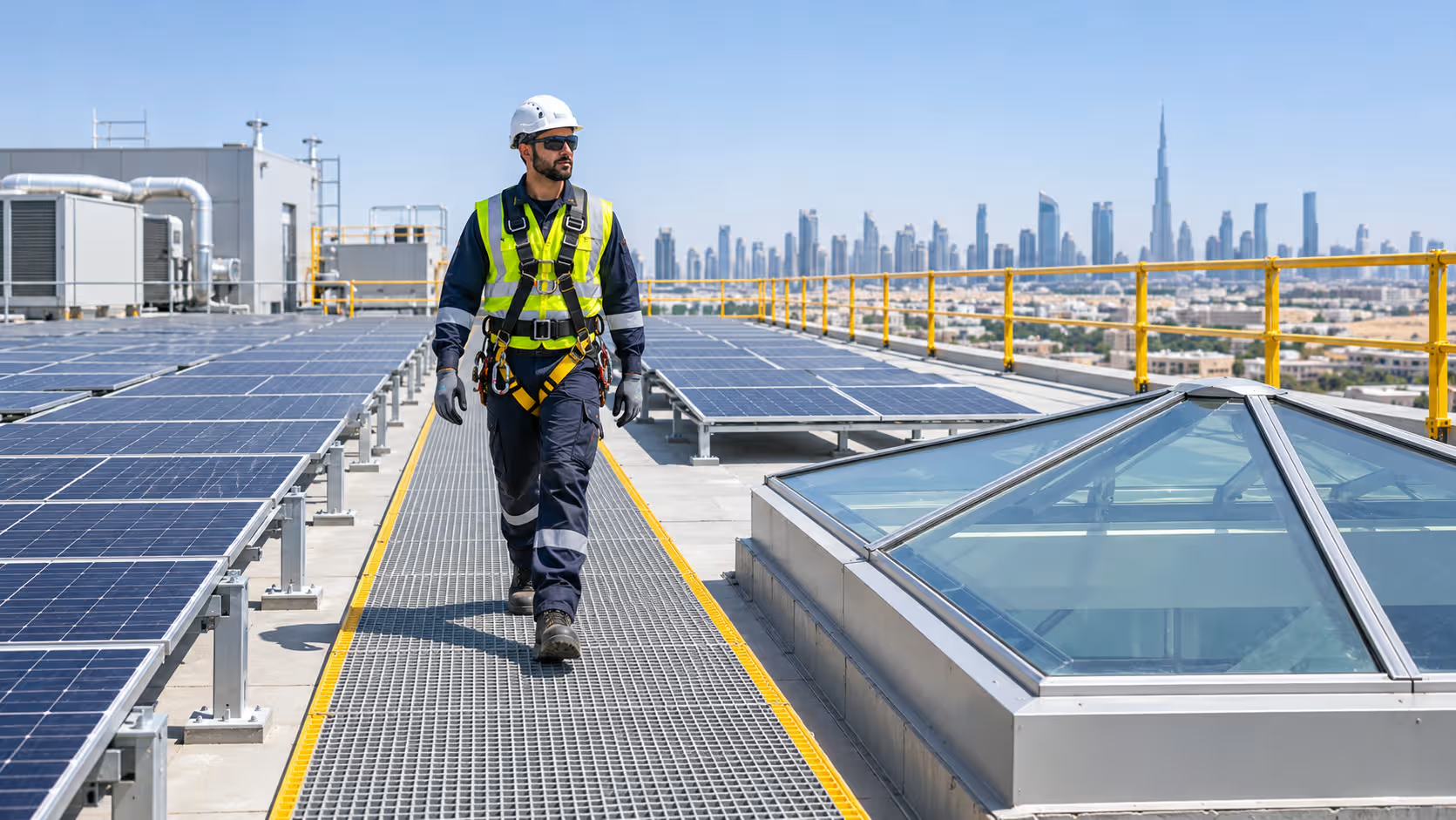
The rapid growth of rooftop solar installations has transformed commercial and industrial buildings into active work zones. While solar panels provide long-term energy benefits, they also introduce new access and maintenance challenges.
A properly designed roof walkway system is essential for ensuring safe movement across rooftops, protecting both workers and roofing materials. When integrated with comprehensive roof safety systems, reliable edge protection systems, and advanced fall protection solutions, rooftop solar environments become significantly safer and more efficient.
Why Solar Rooftops Require Dedicated Access Systems
Solar arrays often cover large portions of a roof, leaving narrow access paths between panels and equipment. Without designated walkways, technicians may:
- Step directly on fragile roofing membranes
- Walk too close to roof edges
- Trip over mounting systems or conduits
- Damage panels or waterproofing layers
Installing a structured roof walkway system creates safe, clearly defined routes for inspection, cleaning, and maintenance activities.
What Is a Roof Walkway System?
A roof walkway system is a slip-resistant, load-distributing pathway installed on rooftops to guide safe access to equipment and service areas.
These systems are typically designed to:
- Improve traction in wet or dusty conditions
- Elevate foot traffic above sensitive roofing surfaces
- Prevent premature roof wear
- Provide safe navigation between solar panel rows
They are especially valuable for facilities requiring frequent solar panel maintenance or HVAC servicing.
Integrating Walkways into Roof Safety Systems
Walkways should never function as standalone solutions. They must be incorporated into broader roof safety systems that address perimeter hazards, fragile surfaces, and fall risks.
An effective rooftop safety framework may include:
- Clearly defined walkway routes
- Safety edge protection at all exposed roof perimeters
- Guardrails around access points
- Skylight protective covers over fragile roof openings
- Permanent anchor points for personal fall arrest systems
This layered approach ensures both collective and personal safety measures are in place.
The Importance of Edge Protection Systems
Solar installations often bring technicians closer to roof boundaries. Without adequate safeguards, roof edges remain one of the highest-risk areas.
Modern edge protection systems provide collective protection by installing physical barriers that prevent accidental falls. These systems may include:
- Freestanding guardrails
- Fixed rooftop railings
- Modular perimeter barriers
Unlike personal fall arrest systems, collective edge protection does not rely on user action, making it one of the most dependable safety measures available.
Enhancing Safety with Fall Protection Solutions
In addition to collective systems, certain tasks require active fall arrest strategies. Comprehensive fall protection solutions complement walkway and guardrail installations.
Key components may include:
- A lifeline system for roof work
- Permanent anchor points positioned along service routes
- Overhead lifeline configurations for continuous tie-off
- Harness-based fall arrest equipment
These systems allow technicians to move safely while remaining secured at all times.
Protecting Fragile Roof Areas and Skylights
Skylights pose a serious hazard on many commercial rooftops. Workers navigating between solar panel arrays may not easily identify these fragile surfaces.
Installing skylight protective covers prevents accidental fall-through incidents and reinforces overall roof safety compliance.
Fragile zones should be:
- Clearly marked
- Integrated into walkway planning
- Avoided in high-traffic pathways
Key Benefits of Roof Walkway Systems for Solar Projects
1. Improved Worker Safety
Defined access routes reduce slips, trips, and falls.
2. Extended Roof Lifespan
Walkways distribute weight and prevent concentrated wear on roofing membranes.
3. Protection of Solar Investments
Safe movement reduces accidental damage to panels and mounting systems.
4. Regulatory Compliance
Integrated roof safety systems support adherence to workplace safety standards.
5. Increased Maintenance Efficiency
Technicians can move confidently and complete tasks faster with safe, stable access routes.
Designing a Complete Rooftop Safety Strategy
For solar rooftops, safety should be addressed during the design phase, not after installation.
A comprehensive approach includes:
- Strategically placed roof walkway system routes
- Reliable edge protection systems along all exposed perimeters
- Integrated fall protection solutions
- Routine inspections and maintenance
- Worker training and emergency planning
By combining these elements, building owners and facility managers create safer working environments while protecting valuable rooftop infrastructure.
Final Thoughts
As rooftop solar installations continue to expand, safe access solutions are no longer optional. A well-engineered roof walkway system, supported by advanced roof safety systems, dependable edge protection systems, and effective fall protection solutions, ensures long-term safety and operational reliability.
Investing in structured rooftop access today prevents accidents, reduces liability, and safeguards both personnel and infrastructure for years to come.
FAQ
1. Why is a roof walkway system important for solar panel installations?
A roof walkway system provides defined, slip-resistant access routes across rooftops. It prevents damage to roofing membranes, reduces slip hazards, and ensures safe movement between solar panel arrays during inspection and maintenance.
2. How do roof safety systems improve solar rooftop maintenance?
Roof safety systems combine walkways, guardrails, safety edge protection, skylight protective covers, and fall protection solutions to create layered protection. This integrated approach significantly reduces fall risks and improves operational efficiency.
3. What are the benefits of edge protection systems on solar rooftops?
Edge protection systems provide collective fall prevention by creating physical barriers at roof perimeters. Unlike personal fall arrest systems, they protect all workers without requiring individual tie-off, making them highly reliable.
4. When should a lifeline system for roof work be installed?
A lifeline system for roof work should be installed when technicians need continuous tie-off while moving across large rooftop areas. Systems such as an overhead lifeline or permanent anchor points provide secure attachment during maintenance tasks.
5. How can fragile areas like skylights be made safer?
Fragile roof elements should be protected using skylight protective covers and clearly marked zones. Integrating these safeguards into the overall roof walkway system ensures workers avoid high-risk areas while performing solar maintenance.