
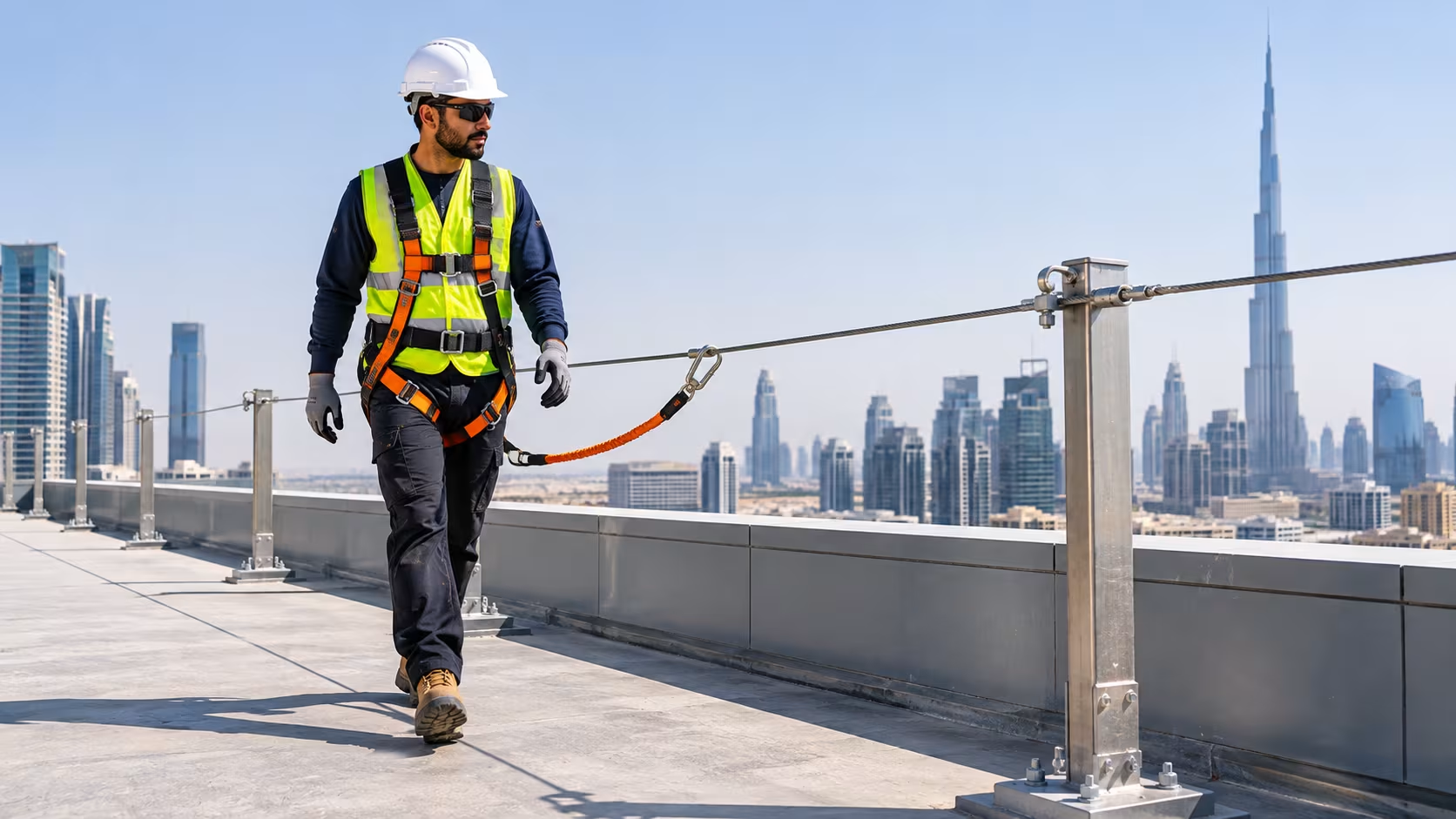
When workers need to move along a roof, a bridge or an overhead structure while staying protected, a horizontal lifeline lets them stay connected the whole way. The choice is between a temporary and a permanent system. This guide explains the difference and when each one makes sense.
What Is a Horizontal Lifeline?
A horizontal lifeline (HLL) is a cable fixed parallel to a fall hazard. A worker connects to it with a lanyard and harness and can travel along the hazard without unclipping. The lifeline is attached to the structure at set intervals and can often change direction to follow a roof edge. It can run at foot level on a roof, or overhead, for example in hangars and bus depots.
Temporary Lifeline Systems
A temporary lifeline system gives workers a secure anchorage for their personal fall arrest equipment during a defined job. It is used on construction and roofing work where guardrails or barriers are not practical.
Typical uses:
- Roof work during construction or refurbishment
- Short maintenance projects
- Sites where the structure is still changing
Temporary systems can be horizontal, for moving along a surface such as a roof or bridge, or vertical.
Permanent Lifeline Systems
A permanent lifeline system stays on the building for its whole life. It is needed wherever people will return to the same area again and again, such as a narrow roof zone near the edge or a sloped roof.
Typical uses:
- Roofs with regular maintenance access
- Plant, façade cleaning and inspection routes
- Overhead structures such as hangars
Designing a permanent horizontal lifeline is an engineering task, because loads are applied to the structure and the end anchors. It should be designed and installed by competent specialists.
Temporary vs Permanent at a Glance
| Temporary | Permanent | |
|---|---|---|
| Use | One-off or short projects | Repeated access over the building’s life |
| Installed | Removed when the job ends | Fixed to the structure |
| Good for | Construction, roofing, refurbishment | Maintenance, inspection, cleaning |
| Main concern | Quick, safe set-up and removal | Structural design and regular inspection |
How to Choose
- How often will people work here? One project points to temporary, regular visits to permanent.
- What is the structure? Check it can carry the loads.
- Is a barrier possible? Where guardrails are not practical, a lifeline is the next step. See roof safety systems.
- What is the rescue plan? A lifeline stops the fall, but a suspended worker still needs to be reached. Read about rescue kits.
Whichever you choose, the lifeline must match the user’s PPE. Our guide on how PPE works with lifeline systems explains the link.
Need help deciding? Talk to the TSS team about your site.
FAQ
1. What is a horizontal lifeline used for?
A horizontal lifeline lets a worker travel along a hazard, such as a roof edge, while staying connected to a fall arrest system.
2. When should I choose a temporary lifeline?
Choose a temporary lifeline for construction, roofing and short-term work where a fixed system is not needed after the job.
3. When is a permanent lifeline the better choice?
A permanent lifeline is better where people return regularly for maintenance, inspection or cleaning, such as on a roof.
4. Does a lifeline replace a rescue plan?
No. A lifeline stops a fall, but you still need a rescue plan and suitable equipment for suspended workers.