
Fall Protection Solutions
Lifeline systems are fall protection systems designed to safely stop (arrest) the fall of worker/s from a working level. Lifeline systems reduce fall distance (minimized line deflection) while effectively managing system forces to maintain a safe connection to various roof structures.
Lifeline systems are designed to be installed on steel or concrete roof-deck-wall structures. They are specially designed to reduce the forces generated at all points of a lifeline imposed on the structure by utilizing a shock absorber unit. They are designed to be used by 1-4 users, depending on the type of fixing, anchor,s and configuration.
Lifeline systems may be used in temporary or permanent applications in horizontal, vertical, or overhead configurations. The system consists of anchorage (which may be a line or a single anchor point), connectors (which may be a trolley or runner connected to the line on one end and the user’s lanyard at the other), and a body harness. It also may include a deceleration device (otherwise known as Inertia blocks or self-retractable lines, SRL), or suitable combinations of these.
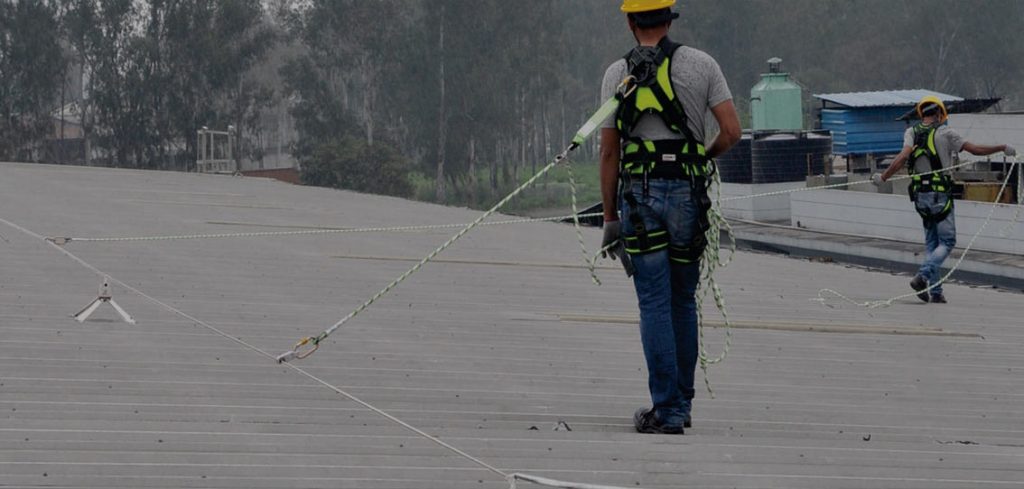
Permanent Lifeline System
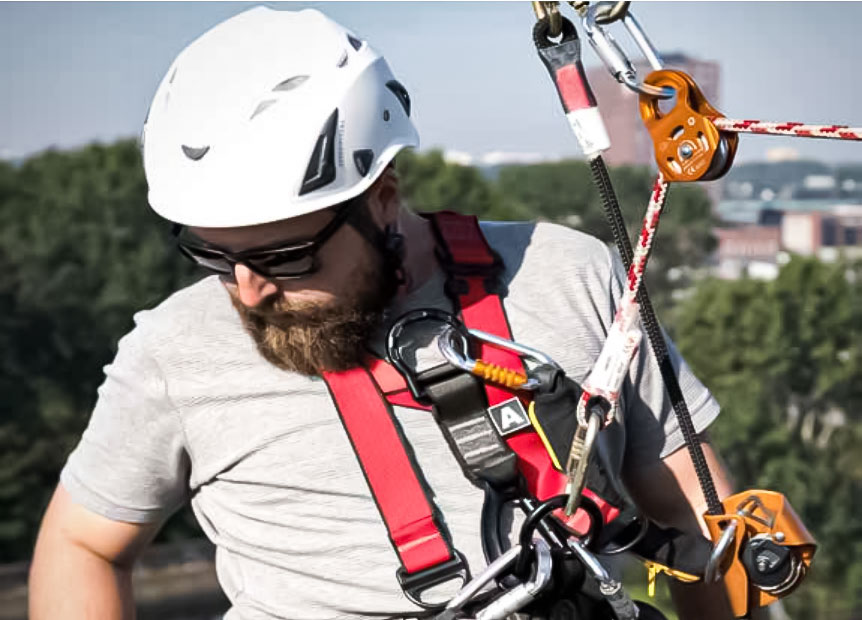
Personal Protective Equipment

Rescue Devices & Equipment

Alsipercha Fall Arrest System
Fall protection solutions
TSS offers a complete range of fall protection solutions tailored for each project. Our systems meet EN, OSHA, and ANSI standards for working at height and are designed to reduce fall-related incidents.
Key benefits:
- Prevent serious injuries and downtime
- Meet regulatory and insurance requirements
- Improve workforce confidence and site productivity
Fall protection equipment
We supply and install a full line of fall protection equipment — from simple harnesses to engineered lifeline systems.
Core components include:
- Full-body safety harnesses (EN 361)
- Energy-absorbing lanyards and retractable lifelines (EN 355 / EN 360)
- Anchor devices and points (EN 795)
- Horizontal and vertical lifelines
Work safely at height
Working at height demands planning, proper equipment, and training. TSS supports clients with system design, installation, and certification for safe roof, scaffold, and façade work.
Best practices:
- Conduct risk assessments for every access point
- Train personnel on fall arrest and restraint use
- Inspect systems regularly for wear or damage
- Keep rescue plans ready and tested
Types of Fall Protection Systems
Fall protection systems are categorized based on how they prevent or arrest falls:
- Fall Restraint Systems: Restrict a worker’s reach to avoid the hazard zone
- Fall Arrest Systems: Stop a fall after it begins, using harnesses and anchors
- Lifeline Systems: Allow safe, continuous movement along a fixed path
- Collective Protection: Guardrails, safety nets, and edge barriers
Fall arrest system
A fall arrest system stops a fall before the worker reaches the ground. It includes an anchor point, harness, and connector (lanyard or SRL).
Design considerations:
- Clearance distance for safe deceleration
- Anchor strength (min. 15 kN)
- Shock absorption and connector length
Personal fall arrest equipment / system
Personal Fall Arrest Systems (PFAS) are used for individual protection in areas where guardrails or safety nets are impractical.
Typical use:
- Rooftop maintenance
- Tower and pylon access
- Confined space entry
Components:
- Anchor point
- Connecting device (lanyard/SRL)
- Full-body harness
Lifeline system
Lifeline systems offer continuous protection while moving horizontally or vertically. TSS installs both cable-based and rail-based systems, fixed or temporary.
Features:
- Supports multiple users
- Minimal deflection under load
- Stainless steel construction for corrosion resistance
- Certified to EN 795 and EN 353
Alsipercha Fall Arrest System
The Alsipercha is an overhead fall arrest system ideal for loading areas, tankers, and open roof structures.
Advantages:
- 360° overhead rotation for full mobility
- Quick installation on temporary bases or fixed columns
- Up to 6.5m coverage radius
- Certified EN 795 Class B
What Are Fall Protection Solutions and Why They Matter
Falls remain a leading cause of workplace injuries. Implementing certified systems reduces liability, ensures compliance, and protects both workers and assets.
Key Equipment for Fall Protection: Lifelines, Anchor Points & Harnesses
- Lifelines: Provide mobility and continuous connection
- Anchor points: Must be rated and installed to manufacturer standards
- Harnesses: Distribute forces safely across the body in case of fall
- Energy absorbers: Limit arresting forces below 6 kN
Permanent vs Temporary Fall Protection Systems
| Type | Duration | Components | Key Advantage |
| Permanent | Long-term maintenance access | Fixed anchors, lifelines, rails | Long lifespan, minimal setup |
| Temporary | Construction, short-term use | Mobile anchors, temporary lifelines | Reusable, quick setup |
Working Safely at Height: Compliance & Best Practices in the Middle East
TSS all systems provide certified fall protection design, installation, and maintenance services across the Middle East, covering the UAE, Saudi Arabia, Kuwait, Bahrain, Oman, and Qatar.
Our systems comply with EN 795, EN 353, and local GCC safety regulations, ensuring maximum protection for workers at height in construction, industrial, and maintenance projects.
- Train workers on correct use and rescue procedures
- Keep inspection logs and certificates
- Conduct annual load tests by certified inspectors
Installation, Inspection & Maintenance of Fall Protection Systems
Installation process:
- Site assessment and engineering design
- Selection of system type and anchor layout
- Certified installation and testing
- Documentation and training for users
Inspection routine:
- Pre-use visual checks
- Biannual technical inspection
- Replacement of worn components
Choosing the Right Fall Protection Solution for Your Project
The correct solution depends on height, structure, access frequency, and mobility needs. TSS engineers assess each site to recommend optimal equipment and configurations.
Why Choose TSS for Fall Protection Solutions
- Decades of regional experience in fall protection and safety systems
- EN/OSHA-certified equipment and installers
- Full project support: design → installation → certification → maintenance
- Local stock and after-sales inspection service
Comparison Table: TSS Fall Protection Systems
| System Type | Application | Key Features | Certification | Users |
| Lifeline System | Roofs & walkways | Continuous movement, multi-user | EN 795 | 1–3 |
| Alsipercha System | Loading bays, open areas | 360° mobility, overhead design | EN 795 B | 1 |
| Mobile Anchor System | Construction zones | Portable, quick setup | EN 795 E | 1 |
| Fixed Rail System | Industrial maintenance | Low deflection, permanent | EN 795 D | 2–4 |