

Preventing falls is a top priority in construction and industrial environments where working at height is common. Two of the most widely used safety approaches are Personal Protective Equipment (PPE) and edge protection systems. While both aim to reduce fall risks, they function in very different ways and are often used together as part of a comprehensive safety strategy.
This article explains the key differences between PPE and edge protection systems, how each works, and when they should be used.
What Is PPE in Fall Prevention?
Personal Protective Equipment refers to wearable safety equipment designed to protect an individual worker. In fall prevention, PPE typically includes harnesses, lanyards, connectors, and energy absorbers.
PPE works by arresting a fall after it occurs or by restraining a worker from reaching a fall hazard. While effective, PPE relies heavily on correct usage, training, and user behavior.
What Are Edge Protection Systems?
Edge protection systems are collective safety measures designed to physically block access to fall hazards such as open edges, shafts, or floor openings. Unlike PPE, edge protection does not depend on individual worker actions to be effective.
These systems are widely used on construction sites to provide continuous, passive fall prevention for everyone working in the area.
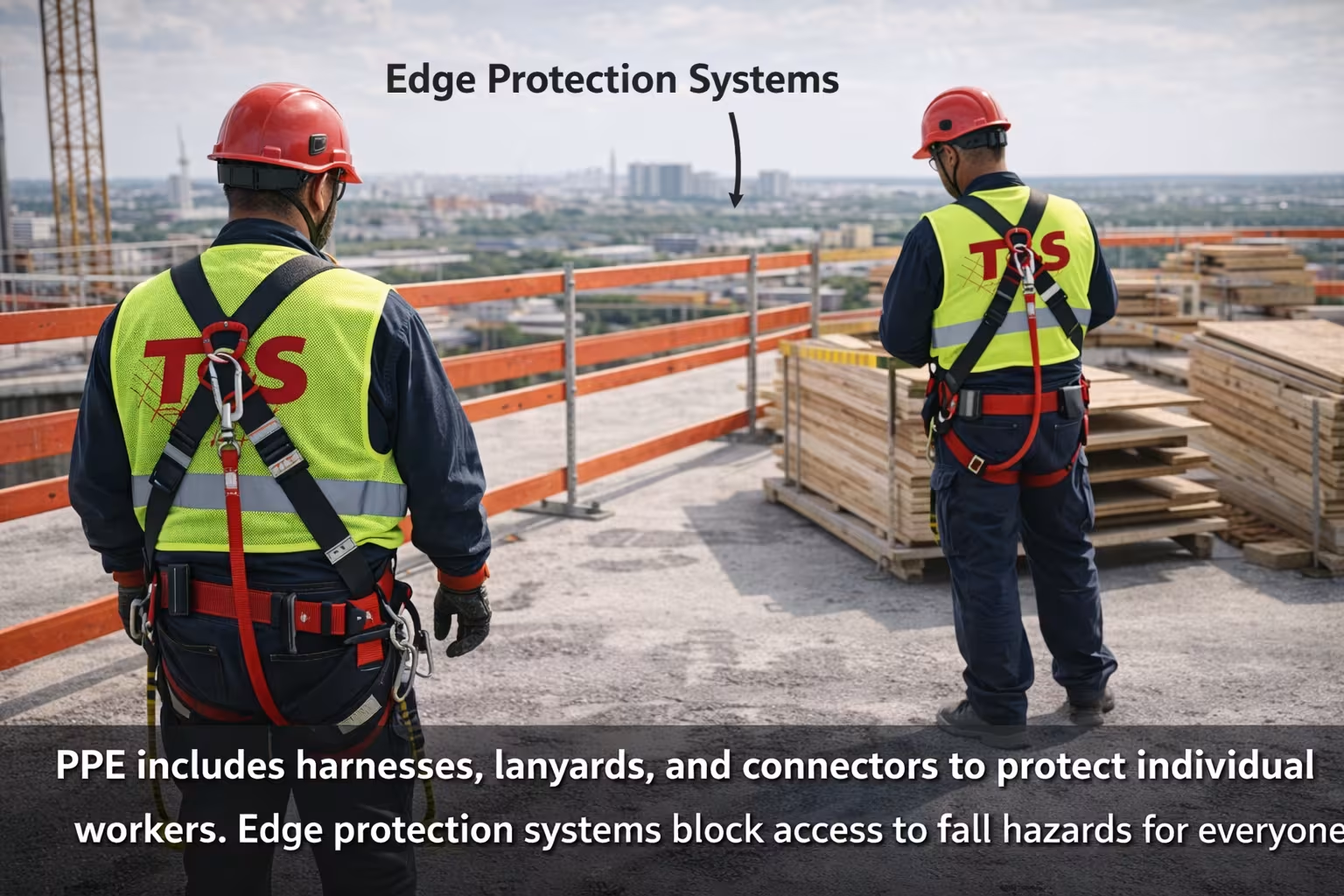
Key Differences Between PPE and Edge Protection Systems
Method of Protection
PPE protects the individual by controlling or arresting a fall. Edge protection systems prevent falls from happening in the first place by creating physical barriers.
Level of User Dependence
PPE requires correct fitting, connection, and user training. Edge protection systems work automatically once installed, making them less dependent on worker behavior.
Area Coverage
PPE protects one person at a time, while edge protection systems safeguard multiple workers simultaneously, making them ideal for high-traffic work areas.
Common Types of Edge Protection Systems
Meshguard Panel
A Meshguard panel is designed to provide robust edge protection while maintaining visibility and airflow. These panels are commonly used on slab edges and elevated platforms where both safety and site visibility are required.
Lift Shaft Protection
Lift shaft protection is used to secure vertical openings during construction, preventing falls into lift or elevator shafts. These systems act as temporary barriers until permanent structures are completed.
Floor Opening Safety Barriers
Floor opening safety barriers are installed around penetrations and voids in floors. They help prevent accidental falls and are a critical component of temporary edge protection strategies.
PPE vs Edge Protection Systems
| Safety Aspect | PPE | Edge Protection Systems |
| Type of Protection | Individual | Collective |
| Fall Prevention Method | Arrests or restrains a fall | Prevents access to fall hazards |
| User Dependence | High (training and correct use required) | Low (passive protection) |
| Area Coverage | One worker at a time | Multiple workers simultaneously |
| Ideal Use Case | Mobile or short-duration tasks | Fixed areas with open edges or voids |
When Should PPE Be Used Instead of Edge Protection?
PPE is most suitable when:
- Edge protection systems cannot be installed
- Workers require mobility beyond protected areas
- Short-duration or specialized tasks are being performed
In these cases, PPE provides flexible protection where collective measures are impractical.
When Are Edge Protection Systems the Better Choice?
Edge protection systems are preferred when:
- Multiple workers are exposed to the same fall hazard
- Work areas are fixed and predictable
- Passive, continuous protection is required
They are especially effective during early construction phases when open edges and shafts are common.
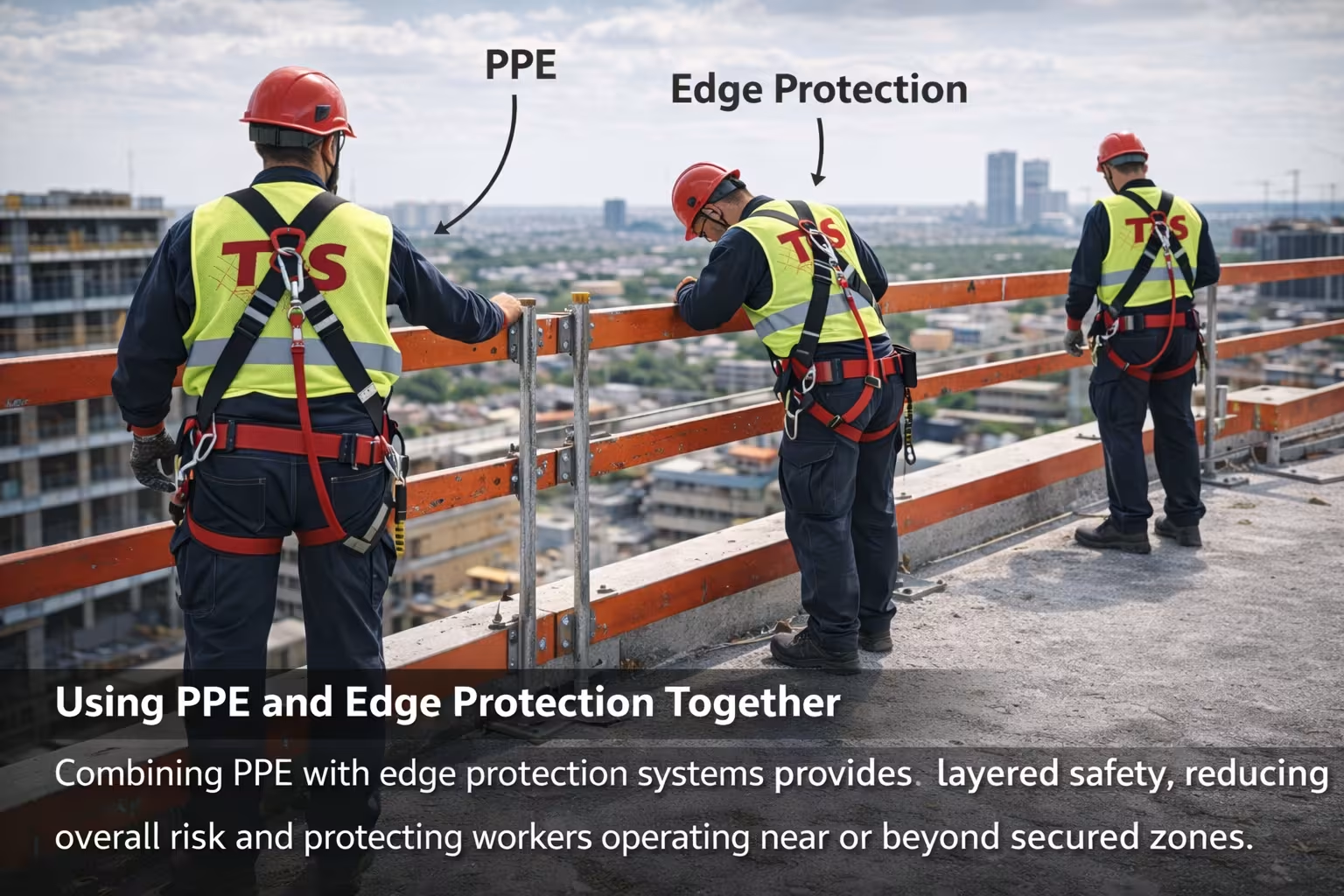
Using PPE and Edge Protection Together
The safest approach is often a combination of PPE and edge protection systems. Edge protection reduces overall risk, while PPE provides additional security for tasks performed near or beyond protected zones.
This layered strategy aligns with best practices in fall prevention and significantly reduces the likelihood of serious accidents.
Conclusion
PPE and edge protection systems serve different but complementary roles in fall prevention. PPE focuses on individual protection, while edge protection systems provide collective, passive safety by eliminating access to fall hazards.
Solutions such as Meshguard panel, Lift shaft protection, and floor opening safety barriers demonstrate how edge protection systems can effectively prevent falls before they occur. Understanding these differences helps safety managers choose the right solution for each work environment and improve overall site safety.
1. What is the main difference between PPE and edge protection systems?
PPE protects individual workers by arresting or restraining a fall, while edge protection systems prevent falls by physically blocking access to hazardous edges or openings.
2. Are edge protection systems safer than PPE?
Edge protection systems are generally safer for shared work areas because they provide passive, collective protection and do not rely on worker behavior or equipment connection.
3. When should PPE be used instead of edge protection?
PPE should be used when edge protection cannot be installed, when tasks require mobility beyond protected zones, or for short-term and specialized work at height.
4. Can PPE and edge protection systems be used together?
Yes, combining PPE with edge protection systems creates a layered safety approach that significantly reduces fall risks on construction and industrial sites.
5. What hazards are best controlled by edge protection systems?
Edge protection systems are best for controlling risks from open edges, lift shafts, and floor openings where multiple workers are exposed to fall hazards.