
Alsipercha Fall Arrest System
Alsipercha is a personal fall protection system, that provides effective overhead protection for those who are exposed to falls when working at heights. This revolutionary system, with more than 15 years of presence in the market, includes a built-in energy-absorber device (diagonal) that reduces the impact forces transmitted to the user and to the structure, in case of fall. Thanks to a wide range of accessories, the Alsipercha can be installed in multiple situations and industrial environments, being one of the most versatile and effective overhead fall protection systems in the market. In compliance with standards: EN-795 (CE certified), OSHA/ANSI (USA), and CSA (CANADA).
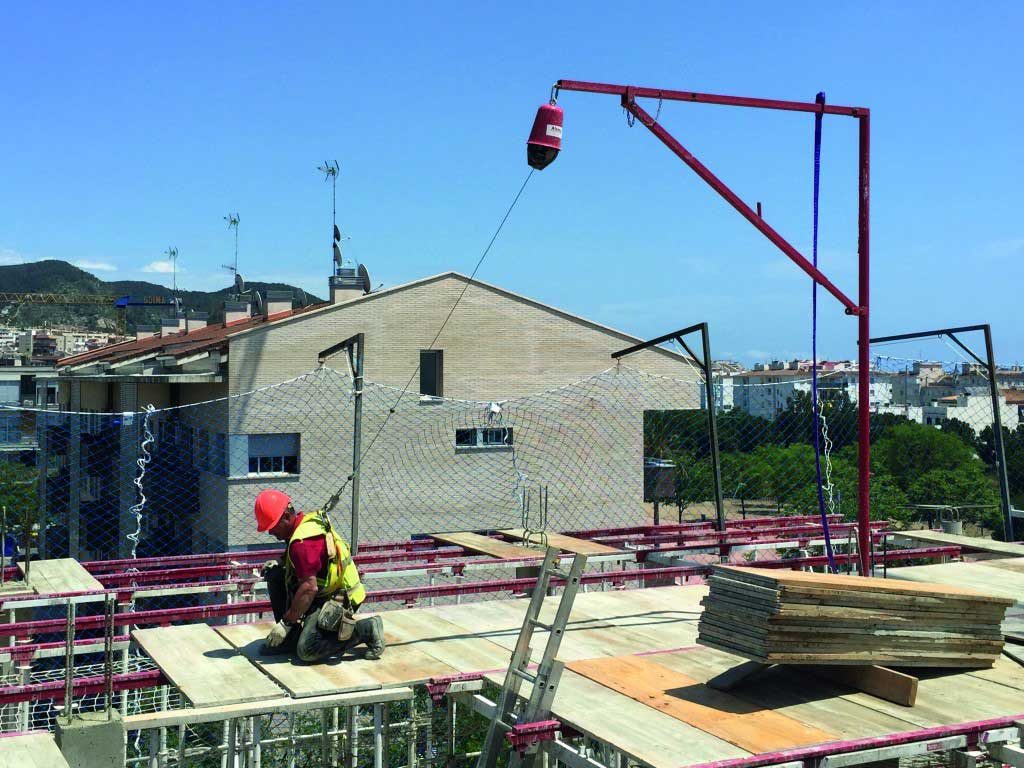
The Alsipercha is an overhead fall arrest system that provides 360° protection for loading bays, slab edges, roof work, tankers, and open-area tasks. By positioning the anchor point above the user and pairing it with a retractable lifeline (SRL), it keeps free-fall distances short and reduces swing-fall risk.
Overhead fall protection system
Overhead systems place the anchorage above the work zone, allowing free movement while maintaining a vertical fall line. This layout improves clearance, reduces tripping hazards from horizontal lifelines, and supports single-user tasks in exposed areas. Benefits- 360° coverage around the post/arm
- Lower required clearance vs. waist-level anchors
- Rapid deployment with mobile or fixed bases
Personal fall arrest device
The Alsipercha integrates with certified PFAS components: full-body harness (EN 361), energy absorber/SRL (EN 355/EN 360), and overhead anchorage (EN 795). The personal setup ensures arresting forces remain within limits and simplifies rescue. Key points- Use compliant harness & connectors
- Check user weight range (including tools)
- Pre-use inspection before each shift
Retractable lifeline system
A self-retracting lifeline (SRL) automatically pays out and retracts as the worker moves. In the event of a fall, the SRL’s braking mechanism activates within milliseconds to limit arrest forces and fall distance. Selection factors- SRL length vs. work radius
- Housing & cable material (corrosion resistance)
- Swivel hooks and fall-indicator status
What Is an Overhead Fall Arrest System?
It’s a system that anchors above the user (e.g., on a post/arm/rail) to minimize free-fall distance and swing. Ideal for loading operations, mezzanines, tanker access, roof edges, and temporary construction bays.Key Features & Technical Specifications of the Alsipercha System
- Overhead rotating arm for 360° movement
- Single-user rated anchor (per model; verify capacity & clearances)
- SRL compatibility: EN 360 certified devices
- Materials: galvanised/painted steel or equivalent corrosion protection
- Setup: mobile or fixed bases for concrete/steel/sub-base
How the Retractable Lifeline Device Works in the Alsipercha System
- SRL is connected to the overhead anchor on the arm.
- The lanyard pays out as the worker moves; tension keeps slack minimal.
- If acceleration exceeds a threshold, the brake engages to arrest the fall.
- Post-event, the unit must be removed from service and inspected/re-certified.
Applications: Construction, Industrial & Logistics Sites
- Construction: slab edges, formwork zones, façade/edge prep
- Industrial: maintenance around machinery, mezzanines, pits
- Logistics: loading docks, tanker top access, container areas
Installation and Accessories (Conical Tube, Tripod, Wall Bracket, Rail)
- Conical Tube: cast-in sleeve for new slabs/columns
- Tripod / Mobile Base: rapid deployment without drilling (temporary)
- Wall Bracket / Column Bracket: fixed mounting to existing structure
- Overhead Rail (optional): linear travel where a longer run is needed
- Site survey & clearance calculation → 2) Base/fixture selection → 3) Certified installation & proof tests → 4) Handover with user training → 5) Scheduled inspections
Compliance with EN 795, OSHA/ANSI & CSA Standards
- EN 795 anchor device (European standard)
- EN 360 SRL / EN 355 energy absorbers
- Local equivalents (e.g., OSHA/ANSI, CSA) per project jurisdiction Maintain inspection logs, serials, and certificates for audits.
Why Choose TSS Alsipercha Fall Arrest System for Middle East Projects
- Local engineering support, fast installation & after-sales
- Systems adapted for heat, sand, and wind exposure
- Stocked accessories and certified inspectors for annual tests
Configuration & Accessory Overview
| Configuration / Accessory | Best Use Case | Fixing Method | Mobility | Notes |
| Conical Tube Base | New pours / slabs | Cast-in sleeve | Fixed | Clean look; ideal for repeated use points |
| Tripod / Mobile Base | Temporary zones, logistics | Ballasted/anchored | Mobile | No drilling; quick redeployment |
| Wall / Column Bracket | Existing structures | Mechanical anchors | Fixed | Small footprint; engineered anchors |
| Overhead Rail | Long work runs | Brackets to structure | Fixed | Smooth travel; multi-bay coverage |